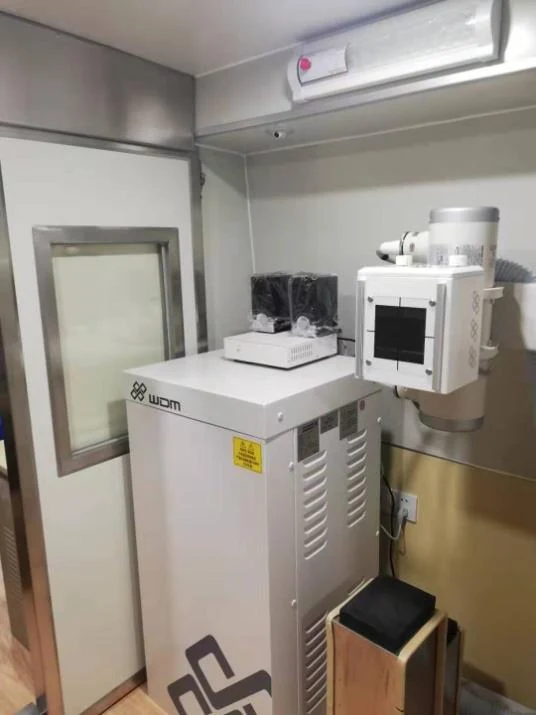
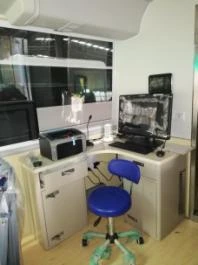
DR operator area
A separate workspace for operating the DR system and communicating with the patient. It is planned alongside the shielded examination room.
FENGQI / MEDICAL
A workplace for medical services at a deployed location. Define the services, patient flow and equipment first; then select the vehicle and conversion layout.

ON-SITE CLINICAL SERVICES
The existing medical examination project combines several examination functions in one vehicle. Its equipment mix is a project example, not a standard package or a promise that every device fits every chassis.
This category also includes medical command and on-site support vehicles, with the specific function identified for each project.
Golden Dragon medical screening vehicle →
01 / MOBILE HEALTH SCREENING
A screening bus brings several examination workspaces to the deployment site. Its layout depends on the services, equipment and patient route—not vehicle length alone. The six areas below are project options, not a fixed standard equipment list.
The 10–12 m, 8–9 m and 7.5 m examples show different room arrangements. Each illustration follows its corresponding project plan and uses standing DR equipment.
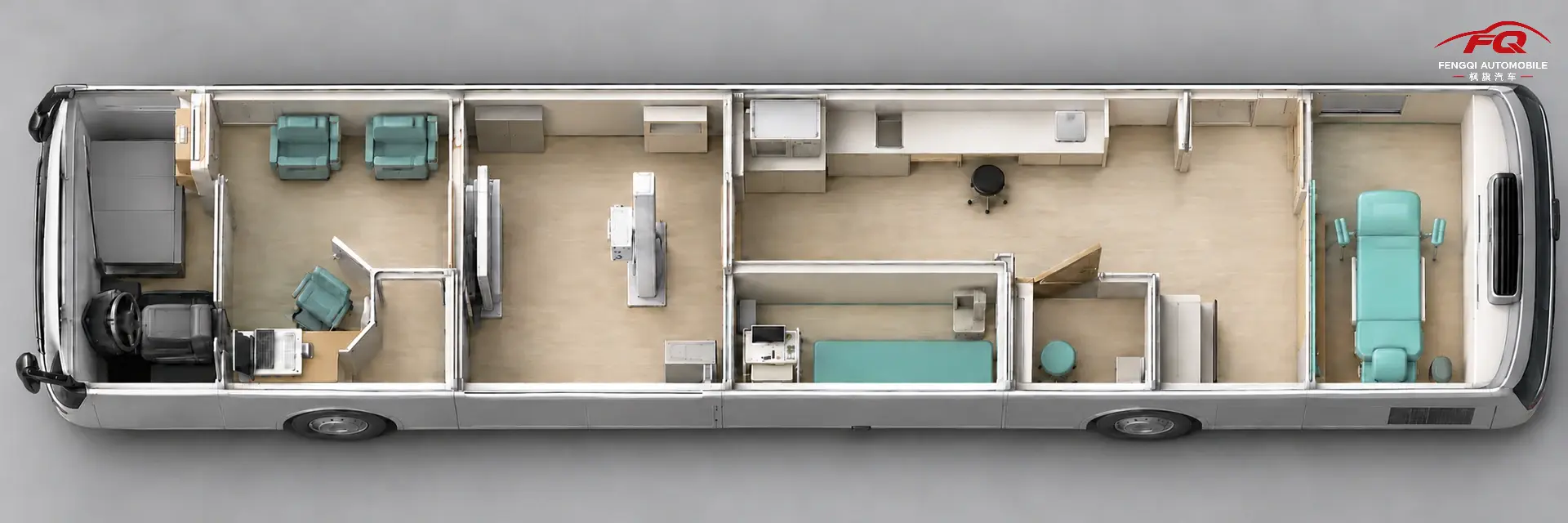
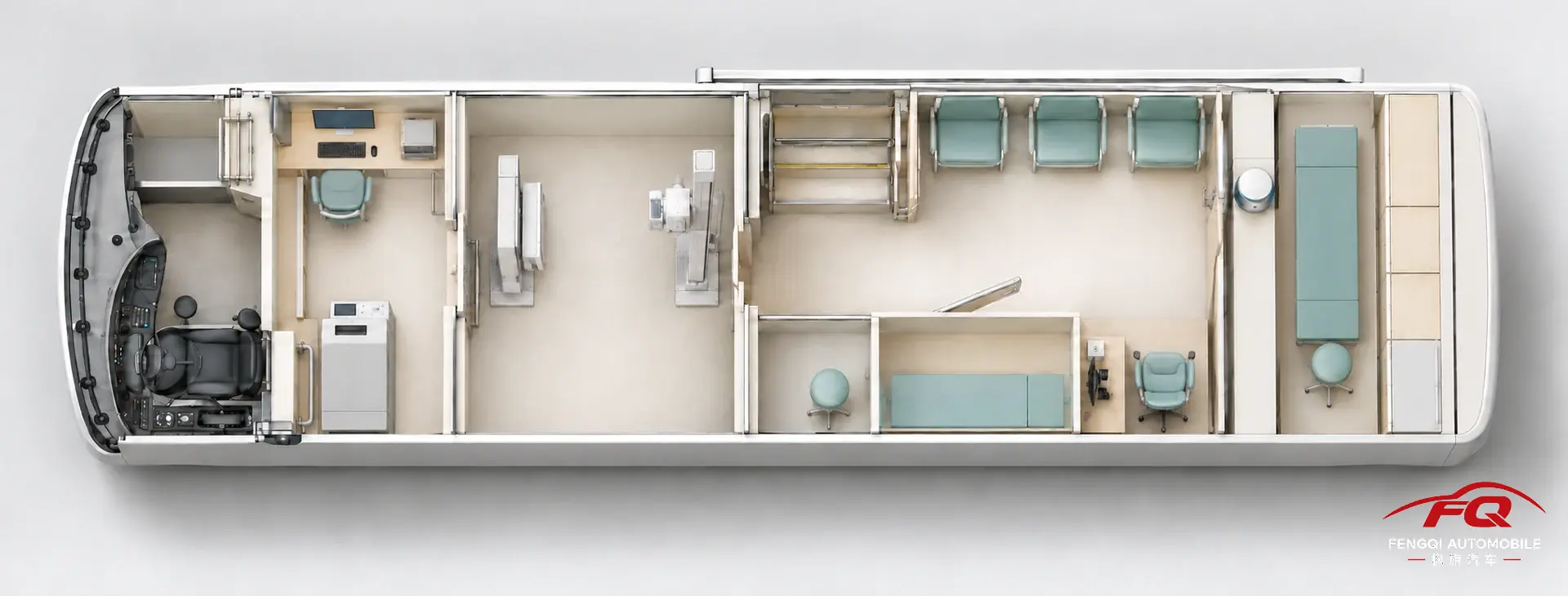
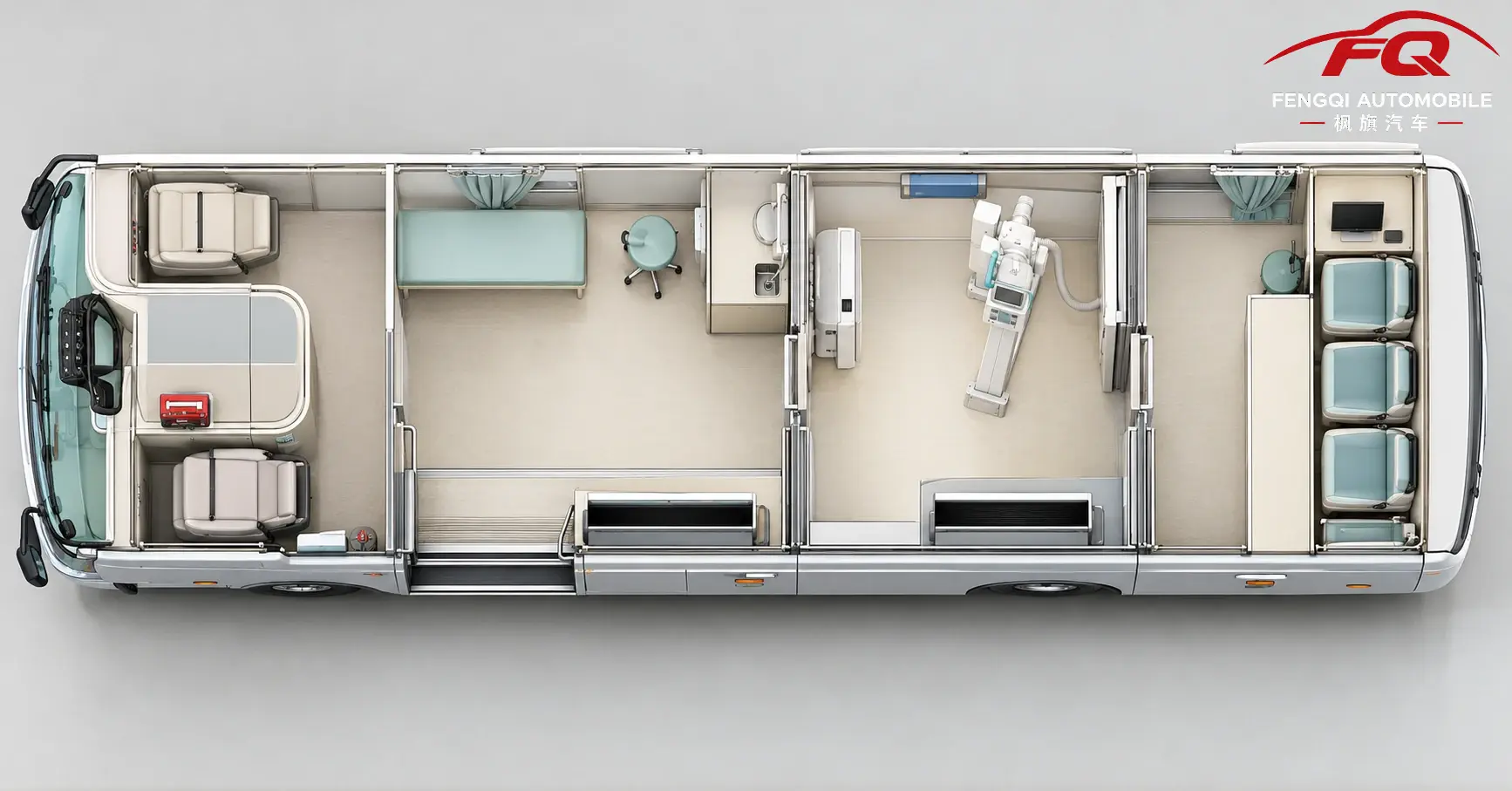
A separate workspace for operating the DR system and communicating with the patient. It is planned alongside the shielded examination room.
The X-ray examination takes place inside the shielded room. Patient positioning, access and privacy must fit the selected examination.
A couch and operator workspace for the selected ECG and/or ultrasound equipment. These services may share an area at different times; a shared room is not two independent examination stations.
A dedicated examination location where the acoustic environment and the selected hearing test need to be considered. An ordinary partition does not itself establish sound-isolation performance.
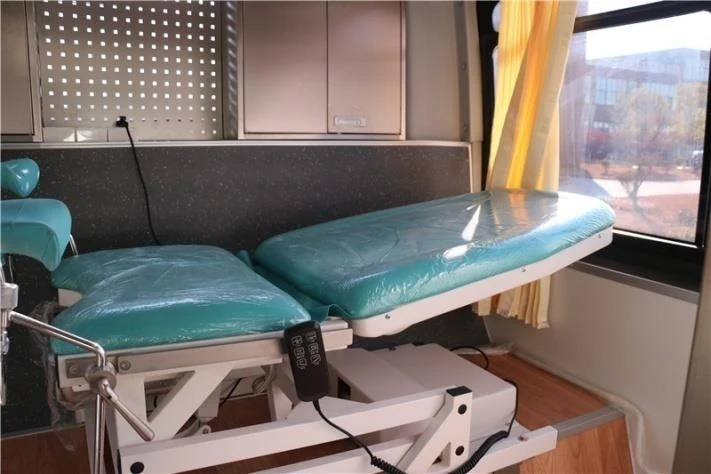
A private examination area with the selected examination chair or couch, staff working space and appropriate access.
For the workflow discussed here, samples are collected onboard and sent to an external laboratory. Confirm which samples will be collected and the laboratory handover arrangements. This is not a claim that a complete biochemical laboratory is installed.
Compact planning: decide which services are essential and which can share space or operate at different times. Do not assume all six areas can operate independently.
An intermediate platform: compare room separation, examination furniture and the patient route using an actual plan. Extra body length does not automatically create an additional examination room.
More space for separating work areas, but the layout still depends on doors, wheel arches, equipment and circulation. Length alone does not establish service capacity.
These are planning considerations, not guaranteed room counts or patient-throughput ratings. The drawings below show different project layouts.
Destination, steering side, road conditions and preferred chassis, if any.
Working areas, patient access, seats, equipment mounting, power and environmental systems.
Device names plus available models, specifications and installation documents.
A medical vehicle’s function—not its chassis badge—guides customs classification. Ambulances generally fall under 8703; equipped mobile surgical clinics and mobile radiological units are examples under 8705.90. Other configurations require review.
Not by default. An ambulance is primarily for patient transport and care during transfer. A mobile clinic provides medical services at a deployed location.
A project may combine functions. Define the actual equipment and workflow; the main service and final configuration determine the design and classification review.
No. Customs classification, China export licensing, destination import taxes, registration and medical-equipment requirements are separate checks.
Send your intended medical services, equipment list or reference photos. Unknown items can be marked “please advise”. We will clarify the vehicle, conversion and equipment scope before quoting.
Discuss your medical vehicle