We Cut 80kg From a Cargo Box. The Materials Weren't the Problem.
Everyone can buy honeycomb composite and aluminum extrusions. So why does almost nobody build a truly lightweight cargo box for EV chassis? Because the bottleneck was never materials — it was the market structure around them, and the habit of adding weight instead of engineering it out.
In the previous article, we looked at the weight paradox: EV chassis are heavier than diesel ones, so the box on top has to get lighter — or you lose payload, range, or both.
This article is the promise kept. Here’s how we actually did it.
The target was, let’s say, ambitious.
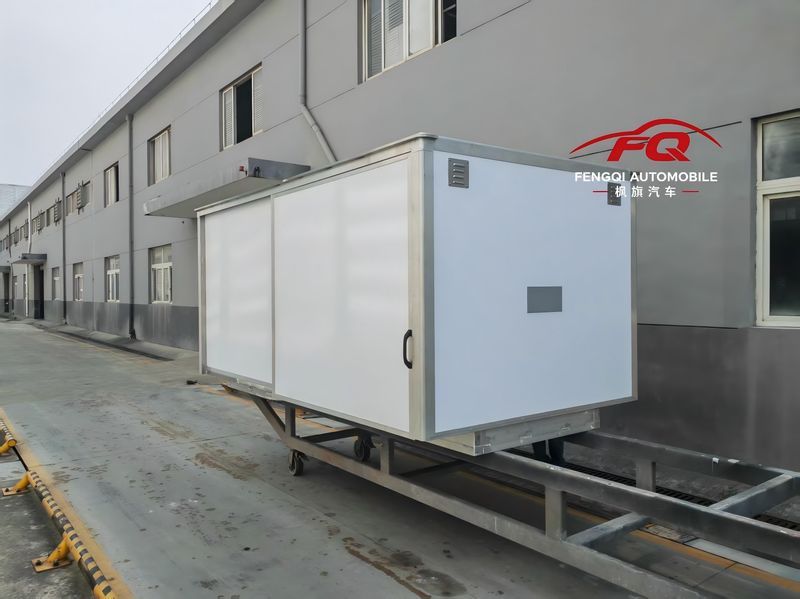
270kg for the box body. 360kg total with all superstructure — shelving, interior fittings, everything. Gross vehicle mass capped at 1 ton. And the whole thing had to survive a 15,000-km bad-road bench test.
Our first prototype came in at 370kg — without interior fittings, which add another 70kg on top. Call it roughly 130kg over where we needed to land.
The Traditional Fix: Just Add More Stuff
When a cargo box isn’t strong enough, the traditional fix is beautifully simple: add material. Thicker panels. More brackets. Heavier reinforcement. On a diesel truck, nobody cares if the box weighs 50kg extra. The engine doesn’t even notice.
On an electric chassis, every kilogram you add to the box is a kilogram the battery has to carry instead. The old reflex doesn’t just stop working — it makes things worse. It’s like trying to lose weight by eating bigger meals.
The Real Challenge Wasn’t Materials. It Was the Market
Here’s the thing: honeycomb composite panels and aluminum extrusions aren’t new. Any manufacturer can buy them. The question was never what to use — it’s how to engineer with them under a weight ceiling that refuses to move.
So why hadn’t anyone already solved this? Because in China, box trucks are treated as a low-end product. Every order is custom — different sizes, different chassis, different specs. Nobody invests in systematic engineering because there’s no volume to amortize the cost against. You build every box from scratch, solve the same problems over and over, and over-engineer each one because you’re guessing, not designing.
It’s a market structure that practically punishes you for doing things properly.
Then a Major Global Logistics Company Showed Up
They didn’t ask “can you make it lighter?” — which is the question every other client asks, and which means almost nothing.
They handed us a spec sheet instead. Weight limits. Durability requirements. Service life targets. Non-negotiable.
In this industry, that’s unusual. Most clients say “make it good.” This client said “make it 270kg.” That clarity changes everything. For the first time, we had a fixed number to engineer toward, not another “figure it out as you go” custom order. And with the client’s volume and long-term commitment behind it, the investment in a proper systematic redesign finally made sense.
The Part Where It Gets Unglamorous
We went through every detail — not reinventing, redesigning.
Every structural component, every connection, every assembly step got re-evaluated against one question: does this serve strength, or does it just serve habit? A surprising amount of what we’d always done turned out to be the latter. “We’ve always done it this way” isn’t an engineering argument. It’s just laziness with seniority.
The principle itself was simple enough: same or better structural performance, less material, fewer processes. But simple and easy are not the same thing. Every change had to clear the 15,000-km bad-road bench test — and most of them didn’t, not on the first try, and often not on the second.
This isn’t the kind of engineering that wins awards. There’s no single breakthrough to point to. It’s gram-by-gram optimization under a hard ceiling — hundreds of small decisions stacking up, each one validated and re-validated against a durability standard that doesn’t forgive shortcuts.
The Result
370kg down to under 360kg total, interior fittings and shelving included. Nearly 80kg saved.
And yes — it still passes the 15,000-km bad-road test.
Why This Matters Beyond One Project
Cargo chassis are going electric globally, not just in one market. Every manufacturer building box bodies for EV trucks is going to hit the same wall: you can’t add weight, but you can’t lose strength either.
The materials are available to everyone. The engineering mindset isn’t. Most manufacturers are still stuck in the “add material until it holds” phase — which works fine, until a client hands you a number instead of a compliment.
The ones who figure out how to engineer under a weight ceiling, before someone forces them to, will be the ones who win the EV cargo transition.
If you’re designing cargo bodies for electric chassis — what’s your weight target? I’d like to hear how others are approaching this. The materials are solved. The mindset isn’t.
Read the previous article: The Chassis Got Heavier. That Was Supposed to Be a Good Thing.
Need a cargo box engineered to a fixed weight target? Contact our team.
Planning a build?
Tell us your operational requirements — we'll come back with an engineered proposal.
WeChat QR

WhatsApp QR